
Are you interested in studying interior design but have no possibility to take part in in-class education? I have listed the best online interior design courses that you should check out.
Key Takeaways
- Online Interior Design Benefits: Studying interior design online offers flexibility, accessibility, and cost-effectiveness, making it a convenient option for learners worldwide.
- Reputable Schools: Consider reputable online interior design schools like The Interior Design Institute, NYSID, BCID, and NYIAD for quality education.
- Certificate vs. Degree: Choose between certificate and degree programs based on your career goals; certificates provide basic skills, while degrees offer comprehensive education for advanced careers.
- Portfolio Building: Online interior design programs often include projects and virtual critiques to help you build a portfolio.
- Accreditation Matters: Ensure that your chosen online program is accredited by reputable interior design accreditation bodies for industry recognition.

Studying Online Interior Design Courses
Studying interior design online has become an increasingly popular option for those looking to pursue a career in this creative and dynamic field. With the flexibility and convenience of online learning, students can now access high-quality interior design courses from anywhere in the world. But with so many options available, it can be difficult to know where to start.
Let’s explore the best educational institutes you can choose from and…
- …the benefits of studying interior design online
- …the different types of programs available
- …how to choose the right program for your needs
The Benefits Of Studying Interior Design Online
Here are some of the benefits of studying interior design online:
- Flexibility: One of the biggest benefits of studying interior design online is the flexibility it provides. Online programs allow students to learn at their own pace and on their own schedule, which is especially helpful for those who need to balance their studies with work or other commitments.
- Convenience: With online learning, students can access course materials and lectures from anywhere with an internet connection. This means you can study from the comfort of your own home, or even while traveling.
- Cost-effective: Online interior design programs are often more affordable than traditional on-campus programs. This is because there are fewer overhead costs associated with online learning, such as building maintenance and utilities.
- Access to top programs: Studying interior design online allows students to access top programs from around the world, regardless of their location. This means you can choose a program that best fits your needs and goals, rather than being limited to programs in your local area.
- Improved technology: With advancements in technology, online learning has become more interactive and engaging. Many programs now offer virtual classrooms, live chats with instructors, and online forums where students can connect with each other.
Best Online Interior Design Schools
Here’s our pick for the best online interior design schools.
The Interior Design Institute (IDI)
The Interior Design Institute is an online school that offers a comprehensive diploma course in interior design. The course is self-paced, which means you can complete it at your own pace and on your own schedule.
The course is designed to provide students with a solid foundation in interior design principles and techniques. It covers a wide range of topics, including color theory, lighting, furniture arrangement, and space planning.

Throughout the course, students will complete a series of assignments and projects that will help them develop their skills and apply what they’ve learned. They will also have access to a personal tutor who will provide feedback and guidance throughout the course.
Upon completion of the course, students will receive a diploma in interior design from The Interior Design Institute. This diploma is recognized by the industry, and graduates will be able to use it to pursue a career in interior design or to start their own design business.
READ: our interview with Jasmine Abel at The Interior Design Institute!
New York School of Interior Design (NYSID)
NYSID is a highly respected institution with a long history of providing high-quality interior design education. Its online programs offer students flexibility and convenience, while still providing the same level of education and support as its on-campus programs.

NYSID offers online programs in interior design, including a Bachelor of Fine Arts (BFA) and various non-degree certificate programs. These programs cover a range of topics, including sustainable design, kitchen and bath design, and interior design fundamentals.
While NYSID is based in New York City, its online programs are available to students anywhere in the world. This means that students can access top-quality interior design education from the comfort of their own homes.
NYSID has a strong network of alumni who have gone on to successful careers in interior design. The school’s alumni include well-known designers such as Bunny Williams, Alexa Hampton, and David Kleinberg.
The British College Of Interior Design (BCID)
The British College of Interior Design (BCID) is an online interior design school based in the UK. BCID offers a variety of online courses and programs in interior design, including a diploma course, an advanced diploma course, and a range of short courses. These programs cover a range of topics, including design principles, color theory, and space planning.
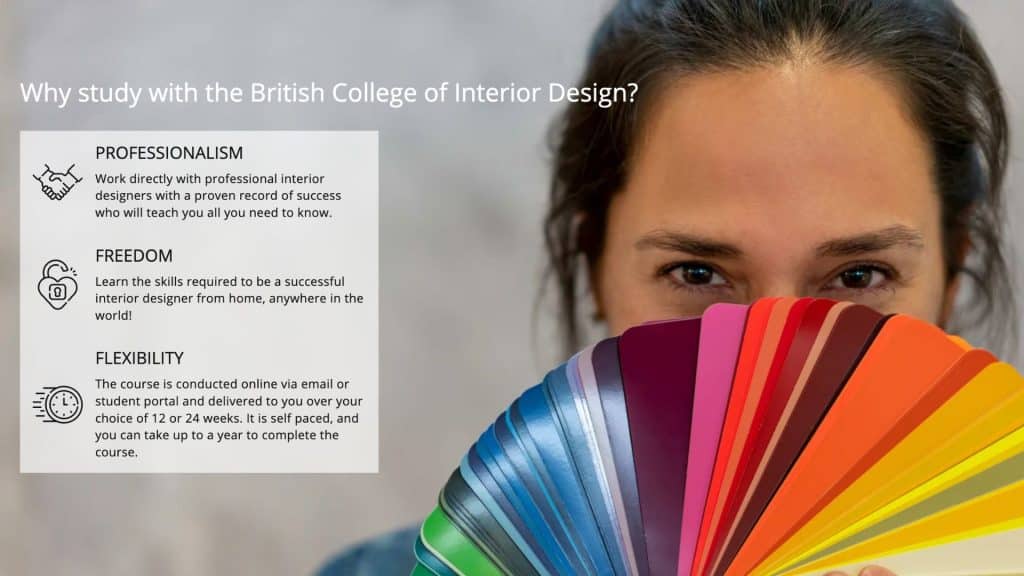
BCID is a highly respected institution with a reputation for providing high-quality interior design education. Its online programs offer students flexibility and convenience, while still providing the same level of education and support as its on-campus programs.
The New York Institute of Art and Design (NYIAD)
The New York Institute of Art and Design (NYIAD) is an online school that offers a range of courses and programs in interior design, as well as other creative fields.
NYIAD offers a variety of online courses and programs in interior design, including a complete course in interior design, as well as courses in kitchen and bath design, feng shui, and staging. These programs cover a range of topics, including design principles, color theory, and space planning.
NYIAD is based in New York City, but its online programs are available to students anywhere in the world. They also offer courses in a variety of other creative fields such as floral design, landscaping, and jewelry design.
Is a Certificate in Interior Design Worth it?
Whether a Certificate in Interior Design is worth it depends on your specific goals and circumstances. Here are some factors to consider when evaluating the worth of obtaining a certificate in interior design:
1. Career Goals: A certificate in interior design can be valuable if you have a strong interest in interior design and want to acquire foundational knowledge and skills for personal enrichment or a potential career change. However, if you aim for a more advanced or specialized career in interior design, a bachelor’s degree or higher may be more beneficial.
2. Time and Cost: Certificate programs are often shorter and less expensive than degree programs. They can be a cost-effective way to gain basic skills and knowledge in interior design without a significant time commitment. Consider your budget and the time you can allocate to education.
3. Skill Enhancement: If you already have experience or education in a related field (e.g., architecture, fine arts), a certificate program can complement your existing skills and make you more competitive in interior design-related roles.
4. Portfolio Building: Certificate programs can help you develop a portfolio of design projects, which is essential for showcasing your work to potential clients or employers.
5. Networking: Some certificate programs offer opportunities to connect with industry professionals and other students, providing valuable networking opportunities.
6. Licensure and Regulation: Be aware that in some regions, a certificate may not be sufficient for becoming a licensed interior designer. In such cases, you may need to pursue a bachelor’s degree to meet the educational requirements for licensure.
7. Specialization: Some certificate programs offer specialized tracks or concentrations (e.g., sustainable design, kitchen and bath design). If you have a specific area of interest within interior design, a certificate program focused on that niche can be worthwhile.
8. Continuing Education: Certificates can also be valuable for professionals already working in interior design who want to update their skills or stay current with industry trends.
A certificate in interior design can be worth it if it aligns with your career goals and provides the level of education and training you need. It can be an excellent option for individuals seeking a basic understanding of interior design or looking to enhance their skills.
Also, in my experience, a certificate program is great is you plan to launch a business in the interior design field!
However, if you aspire to pursue a high-level career in interior design or need formal education for licensure, you may need to consider more advanced degrees. It’s essential to research programs carefully, assess your long-term goals, and make an informed decision based on your individual circumstances.
The Pros And Cons Of Studying Interior Design Online
| Pros of Studying Interior Design Online | Cons of Studying Interior Design Online |
|---|---|
| Flexibility: You can study at your own pace and schedule, making it easier to balance coursework with other commitments. | Limited Hands-On Experience: Online programs may lack the hands-on experience and interaction with physical materials and spaces that traditional programs offer. |
| Accessibility: Online programs are often available to students worldwide, allowing you to access quality education regardless of your location. | Self-Motivation Required: Online learning requires self-discipline and motivation to stay on track with coursework and deadlines. |
| Lower Costs: Online courses can be more affordable, as they often don’t require expenses like commuting, housing, or campus fees. | Lack of In-Person Networking: You may miss out on networking opportunities and in-person interactions with professors and peers. |
| Diverse Learning Resources: Online programs often provide a wealth of digital resources, including videos, simulations, and design software. | Limited Access to Facilities: You won’t have access to on-campus design studios, workshops, or specialized equipment. |
| Personalized Learning: You can choose courses and resources that align with your specific interests and career goals. | Potential for Technical Issues: Technical problems, such as internet outages or software glitches, can disrupt your learning experience. |
| No Geographic Limitations: You can study with instructors and students from around the world, gaining diverse perspectives. | Accreditation Concerns: Some online programs may not be accredited, affecting the recognition of your degree or certificate. |
| Career-Focused Options: Some online programs include business and marketing aspects, preparing you for a career in interior design. | Limited Portfolio Opportunities: Building a portfolio with physical work may be more challenging in an online program. |
| Self-Paced Learning: You can progress through the material at your own speed, which can be advantageous if you need more time to grasp certain concepts. | Less Immediate Feedback: Interaction with instructors may be asynchronous, leading to delays in receiving feedback. |
| Easier Transition for Working Professionals: Online programs are often ideal for those who want to transition into interior design while working a full-time job. | Limited Mentorship: Building strong mentor-mentee relationships with professors can be more challenging in an online setting. |
| No Commute: You save time and money by not having to commute to a physical campus. | Variable Program Quality: The quality of online programs can vary widely, so thorough research is essential. |
Choosing The Right Certificate
Firstly, it’s important to determine the type of certification you want to pursue, as a certificate of completion from a platform like Udemy may not hold the same weight as a certificate from a reputable online design course or college-level certification program.
Additionally, the cost of online interior design courses can vary greatly, with moderately priced courses ranging from $1,000 to $3,000. It’s only worth paying more for a course if you plan to pursue a degree from that particular school.
Lastly, it’s essential to check if the school is accredited, as some countries/states have specific accreditation requirements for interior designers. While most countries have more relaxed laws, it’s always a good idea to check the local guidelines for school accreditation requirements.