
In the design industry, the term “product marketing” might feel distant or irrelevant for professionals whose primary offering is service-based. However, this perspective could limit your growth and undervalue your potential to attract and retain clients effectively. Understanding and implementing product marketing strategies isn’t just for companies with tangible goods; it’s a crucial component of a successful design business – whether you’re crafting interiors, graphics, or branding solutions.
Product marketing isn’t limited to physical products either; it’s heavily utilized in the SaaS (Software as a Service) industry, where intangible digital products are marketed with precision and strategy. This crossover proves that product marketing is not about the type of offering but rather how it’s positioned, communicated, and delivered.
Key Takeaways
- Product marketing isn’t just for physical products; it applies equally to services.
- Shifting focus from creativity to client-centric value helps build trust and clarity.
- Repeatable, scalable systems make your offerings more efficient and profitable.
- Strong positioning helps designers stand out in a competitive market.
- Understanding and adapting to market trends ensures long-term relevance.

Like many product marketing professionals, I did product marketing before I knew it was called product marketing. Early in my IT career, I found myself developing assets that sales can use to improve their closing rate, as well as processes for client acquisition, onboarding, delivery, offboarding, and retention.
When I launched my consulting, I continued packaging services, finding product-market fit, refining messaging to appeal to specific audiences, creating sales enabling tools and environments, and iterating based on client feedback – all classic product marketing activities. It wasn’t until later that I realized these weren’t just good business practices; they were part of a larger strategic discipline called Product Marketing.
In fact, my framework; The Signature Framework, covers to large extent exactly what product marketers do. Check it out if you like frameworks!
Let’s dive into why product marketing matters for designers and how it can elevate your practice. But before that, what exactly is product marketing?
Foundations of Product Marketing
Before exploring the specifics of why product marketing is essential for service-based designers, it’s important to clarify what it entails.
Product marketing is the strategic process of bringing a product to market and positioning it to align with the needs, desires, and expectations of a target audience. Product marketing is what needs to happen before you publish any content on social media, och even before you launch your product. Without the product marketing activities, you risk putting out marketing and offers that don’t resonate with your clients… which in turn leads to no clients and lots of wasted resources! No bueno.
Whether applied to physical goods, digital platforms (like SaaS products), digital products such as courses, or service-based offerings, the core principles remain consistent. The key elements include:
- Identifying Market Fit: Understanding how your offerings solve specific problems or fulfill desires for your audience. Also understanding whether your business is to solve a problem or fulfill a desire is very important – because your marketing will be very different based on this fact.
- Positioning: Deciding who you are for your customers and clients, compared to other alternatives.
- Messaging: Creating clear, compelling narratives that communicate the unique value of your services.
- Strategic Pricing and Packaging: Structuring your services in ways that make sense to your clients, productizing clear offers that are easy to sell, and easy to buy, often using tiered pricing models or packages.
- Promotion: Leveraging various channels to make your offering visible and appealing.
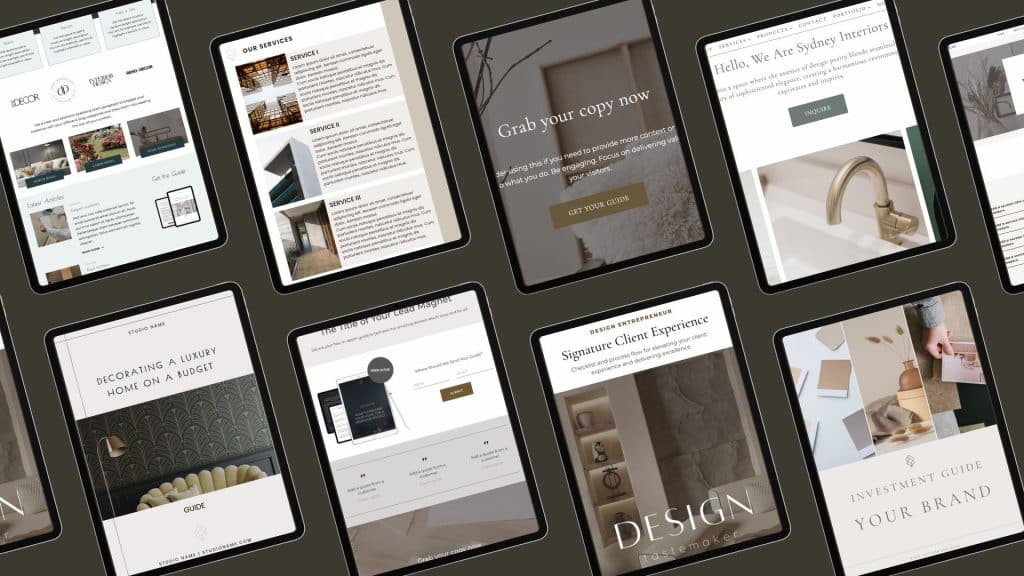
- Sales-Enabling Tools and Environment: Your sales team needs certain assets to be used in the sales process. If your service is complex, they need assets that make the buying decision easier for your customers. If you sell something simple, you need to think about the marketing assets that lead to sales, visualization of your services, and packaging your sales tools suchs as an investment guide to be used in the buying process.
- Feedback Loops: Continuously refining your offerings based on client experiences and market trends.
In technology, product marketing often focuses on explaining complex digital solutions in a way that resonates with users. Similarly, designers can benefit from simplifying and articulating the outcomes of their services to make them more approachable and desirable. This might include visualization of the design process and the journey towards the dream results.
Why Designers Need Product Marketing
While service delivery may differ from selling physical products or software subscriptions, the principles of product marketing remain the same: it’s all about centering the value you deliver and making it accessible and desirable to your target audience.
1. Shifting the Focus from Creativity to Client-Centric Value
Designers often pride themselves on their creative prowess, and rightly so. However, creativity alone isn’t always what clients are buying. Clients seek solutions to their problems, aspirations fulfilled, and transformations enabled. This requires designers to shift their focus from showcasing personal creativity to emphasizing how their services provide measurable value to clients.
Product marketing encourages this shift by requiring a deep understanding of client pain points and aligning your services to address them. For many creatives, this can be challenging. There’s an inherent vulnerability in detaching your value from your artistic identity and centering it around external needs. Yet, doing so builds trust, aligns expectations, and positions you as a problem-solver rather than just a creator.
2. Creating Repeatable, Scalable Systems
One of the hallmarks of successful product marketing is the ability to create repeatable processes that can scale. For service-based designers, this might mean developing clear packages or programs that simplify your offerings. Instead of reinventing the wheel with every new client, a productized approach lets you:
- Streamline communication with potential clients by presenting pre-defined service options.
- Save time by using templated processes and deliverables.
- Increase revenue potential by introducing upsells, add-ons, or tiered pricing.
For example, an interior designer could create a “Signature Room Design Package” with clearly outlined deliverables. By marketing this package as a product, you simplify your sales process and make it easier for clients to understand and invest in your services.
Read: Creating Signature Offers
3. Standing Out in a Crowded Market
The design industry is competitive, and differentiation is key. Product marketing helps you craft compelling positioning that separates you from the sea of generalists. Instead of being another designer offering “bespoke” or “custom” solutions, product marketing encourages you to define a niche, articulate your unique selling proposition (USP), and tell a story that resonates with your ideal audience.
This clarity isn’t just beneficial for attracting new clients – it also improves word-of-mouth referrals. Clients are more likely to recommend a designer who’s known for a specific, well-marketed service rather than a vague “jack of all trades.”
4. Increasing Perceived Value
Perception matters in design, and how you package your services can greatly impact how clients view your worth. Product marketing empowers you to:
- Use strategic messaging to highlight results over process.
- Leverage case studies and testimonials to showcase tangible outcomes.
- Set pricing that reflects the true value of your work rather than defaulting to hourly rates or underpricing out of fear.
For instance, rather than marketing yourself as an “interior designer,” you could position yourself as a “spatial transformation expert” with a flagship product like a “Signature Space Blueprint” that delivers clear, value-driven outcomes.
The design industry evolves rapidly, influenced by changing client preferences, technological advancements, and broader cultural shifts. Product marketing helps you stay ahead by:
- Conducting market research to understand emerging trends and client priorities.
- Innovating your service offerings to stay relevant and competitive.
- Refining your messaging to resonate with current market sentiment.
For example, sustainability is a growing concern in interior design. By positioning a service like “Eco-Friendly Design Consulting” as a product, you tap into this trend and appeal to eco-conscious clients.
Master your Design Business Growth
Get access to our toolbox for designers

Product marketing is The Foundation for Interior Design Marketing and Growth
Product marketing isn’t just for companies with tangible goods or SaaS businesses; it’s a game-changer for service-based designers looking to grow and thrive in a competitive market. By focusing on client-centric value, creating scalable systems, and leveraging strategic positioning, you can transform your services into high-demand offerings that resonate deeply with your audience.
Embrace product marketing as a way to align your creativity with client needs, and you’ll unlock new opportunities to stand out, scale up, and succeed in the ever-evolving design industry.