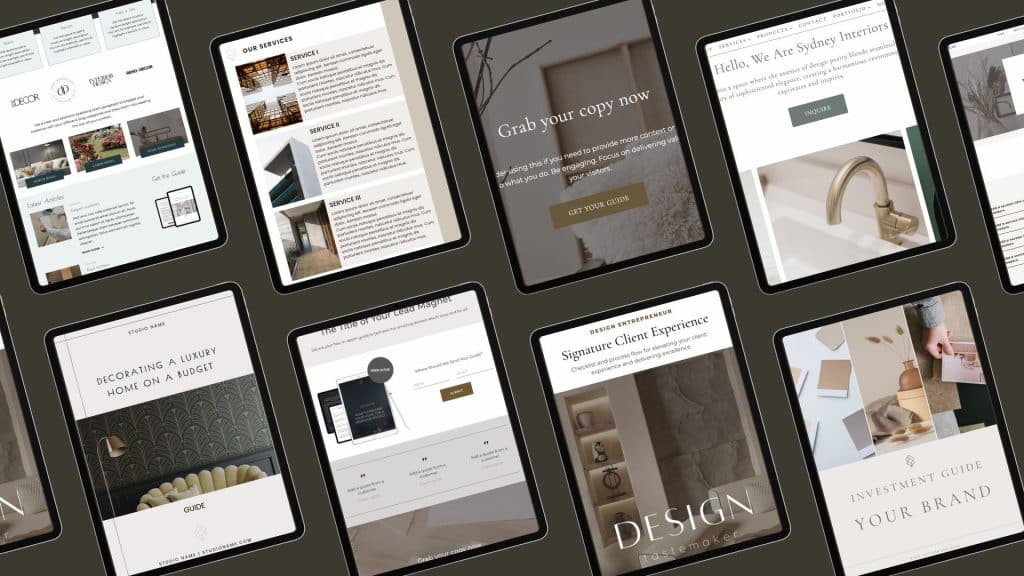

An investment guide is an essential tool in the interior design, architecture & building process. It serves to clarify your services to clients, detailing what they can expect in terms of both the process and the costs involved. By providing this guide, you not only enhance your client experience but also position yourself as a knowledgeable professional who values transparency.
Key Takeaways
- An investment guide clarifies services and costs for clients.
- It enhances the overall client experience, building trust and transparency.
- A well-structured guide highlights your expertise and unique value.

What is the Interior Design Investment Guide?
An investment guide is a key tool that helps you navigate the costs and services involved in your customers’ interior design projects. It provides valuable insights into your offerings and pricing, allowing for informed decision-making, thus making buying easier.
Defining the Investment Guide and Its Purpose
An interior design investment guide serves as a comprehensive document outlining the services offered by your business. It details various aspects, such as pricing for different projects like full-service design or design day service.
The main purpose is to educate clients on what to expect throughout the design process. This guide helps you clarify the project’s financial aspects while highlighting the value a professional designer brings, and educate on the design process. By understanding these details, your clients can better assess the investment required for their project.
Components of an Effective Investment Guide
A well-crafted investment guide includes several essential components. These often feature a clear pricing structure for each service provided. It’s important to see how costs can vary between options like full-service design and more limited services.
Additionally, a good guide addresses maintenance options, which can impact long-term expenses. It should also present testimonials and case studies to showcase your experience and portfolio. An effective investment guide is not just about numbers; it’s about presenting the clients with a clear path forward in the design journey.
Understanding the steps in the design process will help you feel more confident as a client. Each phase is crucial for ensuring a smooth project from start to finish. You’ll learn about client engagement, design development, and the crucial execution phase.
Initial Client Engagement
Your journey begins with the inquiry phase. This often starts with a discovery call or filling out a contact form. During this call, you will ask questions to understand your client’s preferences and priorities.
You might discuss their design style and any specific needs or challenges they have. After that, you will typically send the investment guide that outlines the process. This guide helps you know what to expect. This initial client engagement helps build trust and clarity, setting the stage for a successful partnership.
To summarize – an investment guide is a crucial document in your sales process. This allows you to present your business in a professional manner, making your clients appreciate the level of detail you provide for them before they have signed the contract.